Collapsing homes, bears in the streets, and crippling grocery debt
A dispatch from Russia’s first ever ‘village of military valour’

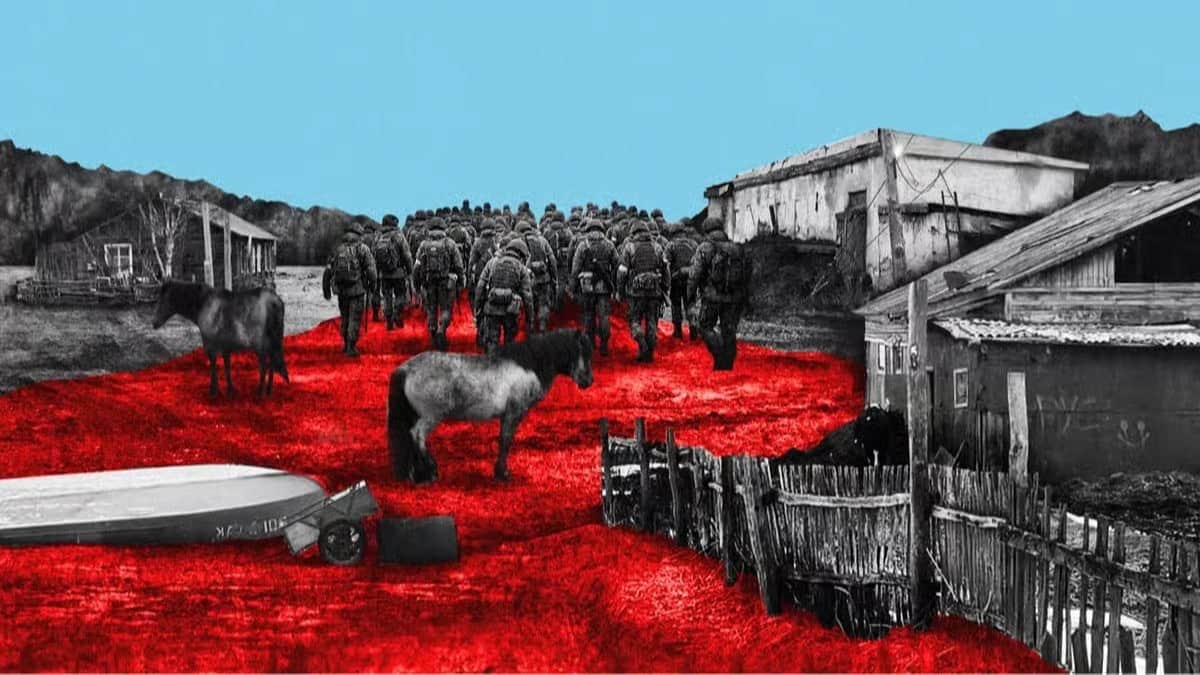

In March 2026, a remote village on the Kamchatka Peninsula became the first settlement in Russia to receive the official designation of “Village of Military Valour” for its role in the war in Ukraine. Sedanka — home to roughly 250 people, most of them from indigenous minority communities — has paid an extraordinary price for this status: more than half the men of fighting age have gone to the front, and many have not come back. Journalist Irina Kravtsova traveled there to find out what the new title actually means for a place where residents rack up millions of rubles’ worth of debt at local grocery stores, emaciated bears wander the streets, and a deployment order may be the only job offer a man is likely to get.
Every spring, black-and-white mold creeps into the homes of Sedanka's residents. It spreads everywhere, across walls and ceilings, leaving terrible dark stains. People scrape it off with knives and spray the walls with strong brine, but the remedy doesn't always work, and never lasts.
Sedanka is an extremely remote village, even by Kamchatka standards. The journey from the village to the regional capital, Petropavlovsk-Kamchatsky, takes about 10 hours — a bus ride followed by a helicopter flight, or, in summer, two days by ATV. Many of Sedanka's residents have never been as far as Petropavlovsk-Kamchatsky, let alone anywhere else in Russia.
About 250 people live in Sedanka today, mostly Koryaks and Itelmen — members of the indigenous small-numbered peoples of the North. Almost no one here owns their home: everyone is registered in municipal housing — single- or two-family units, or wooden two-story barracks. All of these buildings, including the school, are in a state of disrepair. Most are riddled with mold.
Many homes have no central heating or running water. People chop their own firewood and make trips to a spring outside the village. There used to be a communal bathhouse, but it closed in the 2000s. Now those who could manage have built their own; others wash up at a neighbor's place or at home in a basin.
In spring and summer, Sedanka has an almost apocalyptic look. Lakes of sewage form all across the village wherever pipes have given way. Locals grimace and cover their noses, while wild and domestic animals — whose meat the villagers later eat — drink from these puddles. Mountains of garbage lie everywhere, uncollected for months on end.
It wasn't always like this. In Soviet times, by local accounts, Sedanka thrived. People were fed and had work. Women worked in the village's garment workshop, sewing traditional winter clothing and footwear from reindeer hides. Men worked on the collective farm, which specialised in reindeer herding; at the livestock farm; and in fishing cooperatives. In their free time, people could hunt and fish with relative freedom.
After the Soviet collapse, all the agricultural enterprises shut down, and new laws restricting traditional subsistence practices stripped Sedanka's residents of their way of life. Since 2002, the village's population has fallen by a third. For those who remain, simply surviving can be a struggle.
Work in the village is scarce. Some men are lucky enough to get jobs at the local boiler house; the rest scrape by on occasional odd jobs and poaching. The Napana River, which runs near Sedanka, is what keeps people from starving: it's home to pink, coho, and chum salmon. Fishing it, however, requires government-issued quotas. In summer, the Koryaks and Itelmen gather berries, and in autumn, they collect mushrooms.
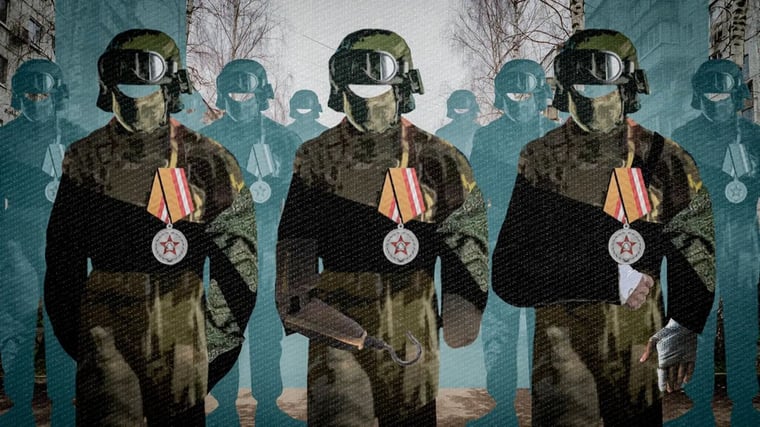
Recently, a new source of income has appeared for local residents — though far from home. Of the 67 men over 18 living in Sedanka, more than half — 52 people — had voluntarily gone to fight in the war against Ukraine by the time this article was published. Nineteen of them have been killed. Their mothers and wives were left without the male help they had previously relied on in the harsh conditions of the Far North. They’re now forced to pay neighbors to do activities that are essential to daily survival: chop firewood, haul water, fix the stoves and the constantly blowing fuses. When you live in a condemned building, something needs fixing every single day.
After visiting Sedanka in August 2025, Kamchatka Governor Vladimir Solodov shared his impressions on his Telegram channel. “Kamchatka is a land of strong people,” he concluded. “Every family here carries a story of courage.” Solodov decided to award Sedanka the title of “Village of Military Valour”, effectively inventing a new status. The regional parliament endorsed the initiative, and it became official in March 2026.
Shortly afterward, Svetlana Zakharova, a 35-year-old Itelmen woman, the former wife of a soldier killed in the war and the mother of his four children, went to the Local Self-Government Ministry in Petropavlovsk-Kamchatsky. She wanted to find out what privileges or opportunities the village's new status conferred on its residents. According to Zakharova, she was told: “Look — sometimes you do something good, someone pats you on the shoulder and hands you a certificate. The certificate is your reward. What other privileges are you expecting?”
‘He couldn't live without the war anymore’
Grigory, a 46-year-old Sedanka resident, is unable to work due to a disability: when he was a baby, he fell headfirst and pinched a nerve, paralyzing the entire right side of his body. His parents were reindeer herders who led a traditional nomadic life, living in the tundra in a chum — a conical hide-covered portable dwelling. His father tended the reindeer, while his mother ran the household, cooking fish soup, baking bread, and sewing hats, clothing, and footwear from reindeer skins. Throughout each school year, Grigory and his older brother stayed in Sedanka with their grandparents; in the summer they went to their parents and traveled the tundra with them.
Now Grigory and his mother, who turned 71 this year, live alone together in a crumbling wooden duplex. His older brother and two sisters moved to Petropavlovsk-Kamchatsky long ago, where they have families and jobs. His younger brother, Yevgeny Antonov, stayed in Sedanka, drifting aimlessly and drinking heavily.
“He'd find work — as a laborer, or in the boiler house — work for a month, go on a binge, and get fired,” Grigory recalls.
Sometimes, drunk, Yevgeny would tell his family, “I'm going to go there — to the war!” But they didn't believe him. And then he actually went.
Over the nearly year-long period Yevgeny spent at the front, he was wounded several times and sent home on leave. According to Grigory, his brother was a closed-off person, and even living under the same roof they barely talked — unless they sat down to drink together. After a few drinks, Antonov would open up: “Grigory, I've found my place. I feel good there.” Grigory knew his brother had killed people, but Yevgeny never shared the details.
The second time his brother was brought home wounded, Grigory says, the uniformed escort pulled him aside. “You're his older brother — talk to him,” he said. “I've arranged a posting for him in Petropavlovsk-Kamchatsky, so he can finish his service in the city.” Grigory passed this on to his brother, but Yevgeny refused. “I'm going back to the front,” he said.
“He couldn't live without the war anymore,” says Grigory.
In September 2024, Yevgeny Antonov contacted his family for the last time. Shortly afterward, the family received a call from the village council saying he had gone missing in action, and suggesting they have him declared dead, but Grigory and his mother refused. A year later they were called again and told that if they made his death official, the family would finally receive the death payment.
“We didn't want the money. We said: ‘Until he turns up, we won't declare him dead.’ They replied: 'There's nothing left to find,’” Grigory says.
In the end, the family agreed.
‘Nobody's ever going to pay you back those debts’
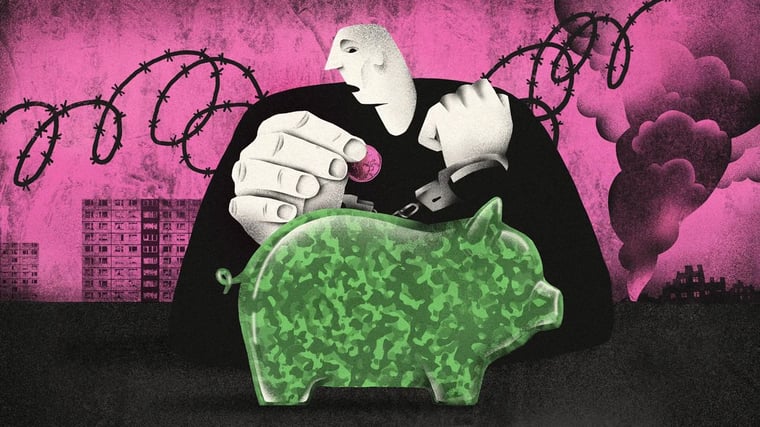
When the money came — eight million rubles, according to Grigory — their mother Amale Antonova split it equally among her four surviving children. The first thing Grigory did with his share was pay off his and his mother's debts at Sedanka's grocery stores. There are three of them, and the Antonovs owed a lot at each: 400,000 rubles (€4,800), 300,000 rubles (€3,600), and 200,000 rubles (€2,400) respectively.
Carrying close to a million rubles in grocery debt is, by local accounts, perfectly ordinary in Sedanka. Food prices in Kamchatka are extremely high to begin with, and in remote villages where goods barely make it through at all, they're even higher. A liter of milk in Sedanka currently costs 320 rubles (€4); a dozen eggs, 280 (€3); a kilogram of chicken, 480 (€6).
“Everyone lives like this,” says Grigory. “Pensions are small, there's no work. People borrow until payday, then when the money comes in, they pay it back — and immediately go back into debt for the same amount.”
Grigory's pension is 26,000 rubles (€314) a month; his mother's is 25,000 (€300).
“How would we have paid off that debt if not for the payment for my brother? We'd have chipped away at it slowly,” he says.
Many people in Sedanka turn to poaching to settle their debts. Summer and winter, buyers from the city make the rounds through Kamchatka's villages.
“In summer you go to the river, catch some fish, gut it right there on the bank, and take the roe to the car,” one local explains. “In winter we bring them smelt. It's illegal, of course. When the cops come around, they go after the buyers.”
In a good season, locals manage to sell 500,000 to 600,000 rubles' (€6,000–€7,300) worth of roe.
In 2025, Governor Solodov promised to allocate funds for “capital renovation of several apartments occupied by families of SVO participants.” Two families in Sedanka were among the lucky ones — the Antonovs included. In April 2026, workers arrived at Grigory and his mother's home, but according to him, they did a “quick-and-dirty cosmetic job" on the inside of an already rotting wooden house.
‘He's no longer a criminal’
Anna Koerkova is a 50-year-old member of the Lamut (also known as the Even) people. Short and broad-shouldered with a close-cropped haircut, she works as a cook at Sedanka's school and leaves for work before dawn. Walking briskly, she glances warily from side to side.
“The bears around here have completely lost their fear of people,” she says. “The other day I stepped out onto the balcony to hang the laundry, and there was a bear standing right below the window, next to my dog. It was clearly going to maul her. I started screaming and swearing, and the bear turned around and left.”
Kamchatka has an enormous bear population, so many villages in the region employ specialists responsible for balancing wildlife conservation with the management of hunting grounds. Sedanka is not one of them.
“There's nothing for the bears to eat out there either, so they come to us. But if we don't shoot them, they'll eat us,” says Koerkova.
The animals' bodies are hauled to the dump outside the village and burned.
“Many rivers in the area are completely dead — all the fish have been fished out of them,” Kamchatka wildlife warden Dmitry Lobov noted in 2020. “And the idea that a bear is entitled to its share of fish doesn't even occur to anyone. People take as much as they can get, and the bear gets nothing.”
Governor Solodov himself acknowledged that many of Kamchatka's fishing rivers are now “over-fished and depleted”. The shortage of food drives bears toward human settlements — drawn by the smell of dumps filled with food waste.
The barracks building where Anna lives on the ground floor is officially condemned. Electricity is unreliable too: the lights keep going out in one place or another, outlets need constant replacing, and recently her 15-year-old son woke her in the middle of the night because the wiring had started smoking.
The Koerkova family has three rooms. Until recently she lived there with her husband and two sons, but in 2022, almost immediately after Russia's full-scale invasion of Ukraine, her husband went to the front. On his first leave, he brought the family a mountain of gifts: most of them had to be carted in bags all the way from Moscow, where everything is considerably cheaper than in Kamchatka. His two sons each received a TV and a laptop.
“He got me a lot of things too,” Anna says. “A jacket, blouses, a handbag, gold earrings, a ring, perfume.”
That leave was Vladmir Akeyev's first and last. In October 2024, at the age of 45, he was killed — both his legs blown off.
Koerkova only learned of her husband's death four days after it happened. She was working as a teacher's aide at Sedanka's kindergarten at the time.
“In those first days, all my coworkers already knew — and I still didn't. We have a lot of soldiers' families here; they hear things from each other. Everyone had already heard from their husbands that my husband had been killed, but they were afraid to tell me. They were waiting for the commander to call, but he didn't call,” she says.
“I went to work, everyone was smiling at me, everyone was watching me, and I had no idea why. Then my older son came home. I said: ‘Your dad hasn't called.’ My son knew I have high blood pressure and heart trouble. He said: ‘Mom, calm down. Mom, Dad's gone.’ ‘What do you mean, gone?’ 'He died,' he said. Naturally, I had a breakdown.”
Vladimir Akeyev was buried in a sealed coffin.
“Everyone else was brought back in zinc coffins with a small viewing window, but his had no window for some reason,” Anna recalls. “I kept looking and couldn't find the window, to look at him one last time. But the commander said: ‘That's definitely your husband in there — we sealed it ourselves.’”
A year after his father's death, in February 2026, his older son Ivan, now 25, also went to the front. Unlike many of his neighbors, Ivan had a job in Sedanka: he worked as a sanitation driver, operating a truck and pumping out sewage. Koerkova tried to talk him out of it, but he wouldn't listen and flew out anyway. He went, first, because “he'd never served in the army and badly wanted to do his duty”, and second, because he wanted to clear his criminal record.
“He was convicted of something when he was young,” Koerkova says. Ivan was 20 when he was convicted of committing sexual acts against a minor. After his release from prison, he was required for eight years to check in with authorities twice a month.
“He had three years left to go, but he couldn't take it anymore,” his mother says. “And once he got to the front, I got a call from the military enlistment office: ‘It's all taken care of, Anna Petrovna — he's no longer a criminal. His record's been expunged.’”
From the death payment she received for her husband, Koerkova also paid off his grocery debts, which had accumulated over the past several years — 1.3 million rubles (€15,750) in total. She also bought her sons a motorcycle and a quad bike. She left her younger son Alexander’s share untouched.
“When he grows up, we want to move to the city,” she says. “Though I don't know if that'll work out.”
Alexander, according to his mother, misses his father terribly and posts photos of him on social media with captions like “I miss you so much”.
Now he and his mother wait anxiously for news of his older brother. Anna Koerkova says she takes sedatives constantly to keep her blood pressure in check and sleeps just three or four hours a night.
“I'm always on edge. My husband could go three months without calling when he was on the line. And now my son... He's already gone several weeks without calling, for the second time. I wait for that call day and night. I cry all the time.”
Author: Irina Kravtsova