‘Her only job is to carry out orders’
Russia is getting a new human rights commissioner. Her appointment is the last nail in the coffin of the office's independence

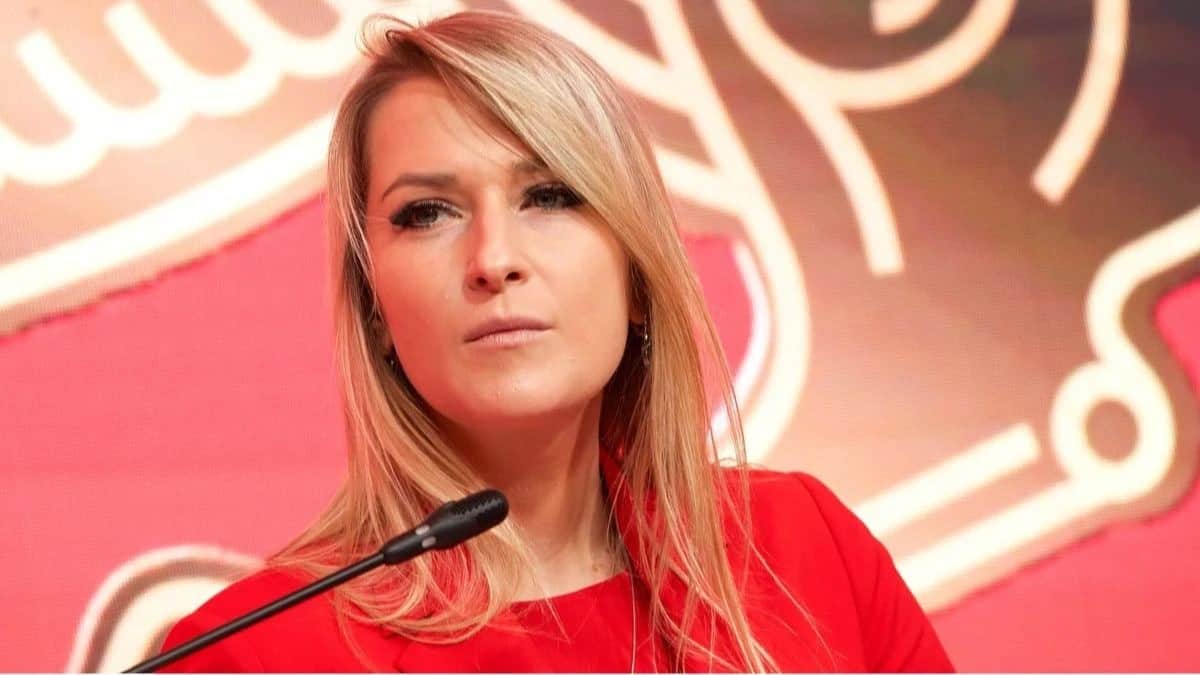
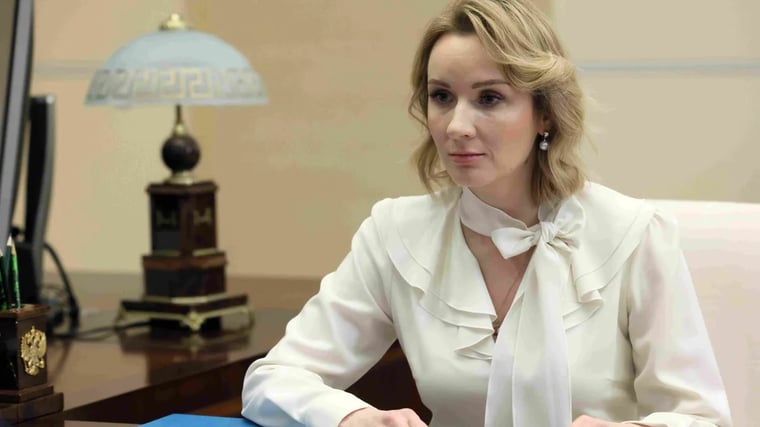
Last month, Russian Human Rights Commissioner Tatyana Moskalkova’s 10-year mandate came to an end. To replace her, the country’s ruling United Russia party has unanimously backed Yana Lantratova, a 37-year-old State Duma deputy from the nominally opposition party A Just Russia, making her appointment all but certain. Lantratova's career so far has been defined far less by the defence of human rights than by careerism, close collaboration with the Putin administration, and a willingness to inform on anyone who crosses the Kremlin's lines. Novaya Gazeta Europe takes a look at the past of Russia’s new ombudsman.
In 2015, two Tajik migrants and their five-month-old son were detained by officials in St. Petersburg. They were taken to a police station, where officers forcibly removed the healthy baby from his mother’s arms. Less than 24 hours later, the child was pronounced dead under unclear circumstances.
Russia’s Presidential Human Rights Council, still a relatively authoritative body at the time, conducted its own investigation into the child’s death. Its conclusions were unambiguous: the police had no grounds for separating the child from his parents. A case was opened against the officers for causing death by negligence.
Legal expert Ilya Shablinsky, then a member of the Human Rights Council, tells Novaya Europe that not everyone in the organisation supported the finding against the police. Chief among the dissenting voices was the council’s executive secretary, Yana Lantratova.
Now, a decade later, Lantratova is set to become, in theory at least, Russians’ foremost defender against state abuse.
The position of human rights commissioner was established by Russia’s 1993 Constitution, amid the wave of democratisation that followed the collapse of the USSR. Its first holder, Sergey Kovalyov, was a former Soviet dissident who used the role as a platform to protest widespread rights violations by Russia during the First Chechen War.
Until 2014, the post was filled by Vladimir Lukin, who spoke publicly on multiple sensitive political issues and supported Russia’s LGBT community. In the years since, however, the office has been gradually integrated into Putin’s power vertical.
Lantratova will replace the Kremlin loyalist Tatyana Moskalkova, whose role since the full-scale invasion of Ukraine has revolved around prisoner exchanges and transfers, as well as the status of Russian war veterans. She leaves behind an institution which claims it does not have the authority to interfere in the affairs of Russia’s prison systems, prosecutors, police forces and intelligence agencies — the very state organs that the drafters of the constitution intended be held to account.
The Young Guard
Yana Lantratova was born in Leningrad, now St. Petersburg, in December 1988. According to her official biography, her father served in the military and her mother was a doctor.
She began her career not in politics, but in television: in the mid-2000s she worked at the Petersburg-based Channel Five, as well as for the Russian edition of MTV. In 2011, she graduated with a degree in journalism from St. Petersburg State University.
It was around that time that she joined the youth wing of Russia’s ruling political party, United Russia, known as the Young Guards. Founded in 2005, at the beginning of Vladimir Putin’s second presidential term, by the early 2010s the organisation had morphed from a youth movement into a recruitment system for Russia’s future political elite.
“United Russia was making a real effort to refresh its personnel … by setting up pro-government youth platforms”, one former Young Guards manager tells Novaya Europe. Supplied by a constant stream of ambitious “young careerists”, he says the organisation became “a sort of ‘young nobility’, except it wasn’t noble at all.”
Lantratova first joined the Young Guards as a regional coordinator for the St. Petersburg branch, known for its extensive ties to the central party structure, before rapidly being promoted to the organisation’s federal council. She also worked as an assistant to Vitaly Milonov, a member of the Petersburg Legislative Assembly and one of Russia’s most vocal advocates against LGBTQ rights.
While with the Young Guards in St. Petersburg she met her future husband, political strategist Iskander Sultanov. Together, they took the next step in their “public service” careers by founding the Union of Russian Volunteers in 2012, a network of volunteer organisations that has since been renamed Rosvolontyor.
Officially, Rosvolontyor engaged in humanitarian assistance: providing aid in emergency situations, supporting orphanages, and working with disadvantaged social groups. It quickly grew in size and gained the support of the Kremlin, often cooperating with regional governments to coordinate crisis responses.
Today, the group’s humanitarian activities are supplemented by its “patriotic” work recruiting soldiers to the war in Ukraine, providing aid to Russian servicemen, and organising nationalistic concerts and events across Russia. Lantratova is still listed as the head of Rosvolontyor, and remains involved in its work.
‘Ready-to-use operatives’
Shortly after founding Rosvolontyor in 2012, Yana Lantratova became a member of Russia’s Presidential Civil Society and Human Rights Council (HRC). In 2015, she was promoted to be the council’s executive secretary — a key figure in the HRC’s management.
Several of her colleagues at the time perceived her mostly as a proxy for the presidential administration. According to Ilya Shablinsky, a legal expert and former member of the HRC, Lantratova was a “fairly ordinary functionary, carrying out tasks for the president’s office” and otherwise uninterested in defending people’s rights.
“About two-thirds of the council was appointed at the suggestion of [then-chairman of the HRC] Mikhail Fedotov — people with a background in human rights,” Shablinsky tells Novaya Europe. “But the rest came directly from the presidential administration. The set-up was simple: some people tried to do something, others held it back. Lantratova belonged to the latter group.”
Lantratova’s official responsibility at the HRC was overseeing the agenda on children’s rights, but — in Shablinsky’s recollection — her main focus was instead on trips she took to the unrecognised separatist states in the Donbas, as well as work contributing to “state policy”.
Exiled political analyst Ekaterina Schulmann, who worked at the HRC at the time, remembers Lantratova not as an independent political figure, but as a part of the presidential apparatus from the very beginning.
“These people are ‘ready-to-use’ operatives”, says Schulmann. “They can do anything you like, say anything you like. They have no stance of their own; their only job is to carry out orders.”
Lantratova’s official focus on children’s rights was no accident, and would play a key role in furthering her political career. As Schulmann notes: “Protecting children from ‘threats’ is a formula that has been used to justify the most harsh and repressive policies of recent years.”
Think of the children
In 2014, Lantratova joined the Russian presidential commission on Ukraine and began regularly travelling to the newly-declared breakaway republics in Donetsk and Luhansk, where she was tasked with “protecting children” in the conflict zone.
With the help of her own Union of Russian Volunteers, she began organising the transportation of children from the Donbas to Russia. Officially, these transports were called “humanitarian evacuations”, and were carried out for medical treatment and recovery in Russian facilities. These “evacuations” were widely celebrated in the Russian media, and strengthened her positioning in pro-government circles.
However, human rights activists soon became alarmed about the lack of transparency surrounding Lantratova’s work in Ukraine. It was not always clear on what grounds the children were being transported across the border, or how contact with their relatives was being maintained.
In parallel with her work in the presidential administration, Lantratova became involved in several dubious information campaigns against the Russian opposition — chiefly where unfounded allegations were made surrounding conduct with children.
For instance, in 2012 she was a key instigator of a government harassment campaign against the popular blogger and opposition activist Rustem Adagamov. Adagamov had been accused by his ex-wife of sexually assaulting an underage girl while living in Norway; Russian investigators launched an investigation and the blogger was forced to flee the country, but the case never reached trial.
Despite the lack of evidence, the Russian authorities launched a prolonged media campaign against Adagamov. According to leaked correspondence from Lantratova’s boss at the time, Timur Prokopenko, Lantratova suggested ways that the media could discredit Adagamov’s reputation, including suggesting that “sex with babies and children is the norm” in Norway.
Lantratova was also involved in a case linked to the multi-millionaire banker Olga Mirimskaya, centring on a conflict between Mirimskaya and her partner Nikolai Smirnov over a child born via surrogacy. After their breakup, Mirimskaya pursued criminal charges against Smirnov, the surrogate mother, and several others for the alleged “sale of a minor”.
The allegations were later found to be fabricated, and the investigator involved was subsequently convicted of taking a bribe from Mirimskaya. However, Lantratova publicly supported a state-aligned media campaign promoting claims that Smirnov had kidnapped the child, and allegedly received expensive gifts from Mirimskaya, including a luxury yacht vacation, in exchange for her support.
The ‘legislative beacon’
In the 2021 Russian parliamentary elections, Lantratova was elected as a member of the State Duma as a candidate for A Just Russia, one of the minor parties in Russia’s “systemic opposition” which props up Putin’s regime.
According to Ekaterina Schulmann, Lantratova’s move to the Duma came as little surprise: “In 2021, the presidential administration put several of its staff up for election on various party lists. Lantratova was one of them.”
In parliament, Lantratova focused on issues relating to civil society and NGOs, and quickly established herself as a prominent figure. She became chair of the parliamentary Committee on Civil Society Development, and was one of the most active sponsors of legislative initiatives.
Schulmann describes her as a “legislative beacon”: Lantratova’s inclusion as a sponsor of a bill usually meant that the initiative would be passed. Bills sponsored by Lantratova included expansions of Russia’s “LGBT propaganda” laws, restrictions on access to education for the children of migrants, and harsher penalties for people convicted of political offences.
Following Russia’s full-scale invasion of Ukraine in 2022, Lantratova continued her visits to the now-annexed territories in the Donbas, and publicly accompanied children who were once more being “evacuated” to Russia. These transports have been condemned by Ukraine and international organisations as forced displacements, illegal under international law.
Together with the former Children’s Rights Commissioner Anna Kuznetsova, Lantratova sits as an expert for the Parents’ Chamber, an organisation dedicated to “protecting the traditional family”.
She also emerged as a torchbearer for the Kremlin’s wartime campaign to improve Russia’s low birthrate, advocating for legislation restricting the right to abortion, and introducing monetary incentives for families with children.
‘Lantratova is the mop itself’
Lantratova rarely publicises her private life, instead carefully cultivating a public image which has remained virtually unchanged over the past ten years: blonde hair, eyelash extensions, high heels, and tailored jackets now sporting a Z-shaped brooch — the symbol of the Russian army in Ukraine.
She is now apparently divorced from her husband, Iskander Sultanov — she has not listed him on her parliamentary declaration since 2022. The couple have a son, Arseniy, who is 14 years old.
According to Lantratova’s Instagram account, which she maintained until May 2025 despite the platform being banned in Russia, she enjoys holidaying on Lake Baikal, attending the theatre, and horse riding, and says that travelling has become a “source of inspiration and energy.”
Leaked data suggests that Lantratova resides in Moscow, in a 100-square-metre flat in a modern residential complex in Rostokino, worth up to 42 million rubles (€480,000). In 2024, she declared an annual income of just over 8 million rubles (€92,000).
In numerous interviews, she speaks about the same three topics: children, war, and the Donbas. She says she was inspired to help “refugees” in Ukraine, and specifically children, by a woman in Donetsk who called her for help while under fire, a story she has repeated several times.
In Lantratova’s words: “Although I am currently a politician by status, I introduce myself first and foremost as a human rights activist, and only secondarily as a politician, because that is how I see myself.”
According to Schulmann, Lantratova’s appointment as Human Rights Commissioner will mark the final stage in bringing the structures of the Russian state under Putin’s control: “If Lantratova becomes commissioner, it means that this institution, too, will fall under the complete authority of the presidential administration.”
Shablinsky, in turn, says that Lantratova can now complete the process of degrading the office that her predecessor, Tatyana Moskalkova, started.
“If Moskalkova was the nurse with a mop, who walked around the ward cleaning where she was told, then Lantratova is the mop itself.”